


Aramid Yarn
IMPACT is one of the most professional aramid yarn manufacturers and suppliers in China. Please feel free to wholesale high quality aramid yarn at competitive price from our factory. For more cheap products, contact us now.
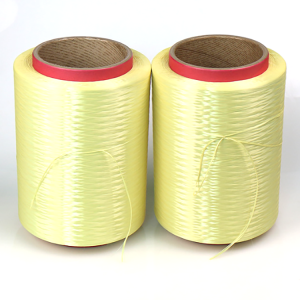
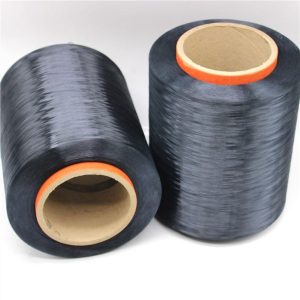
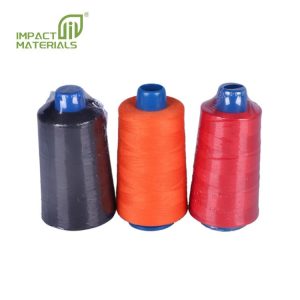
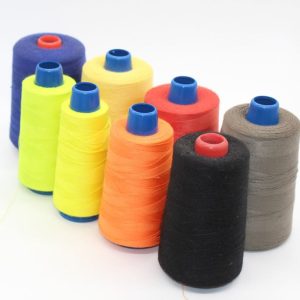
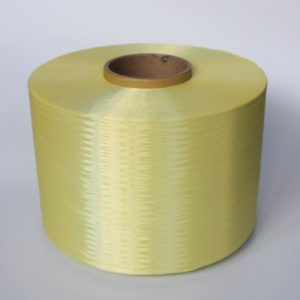
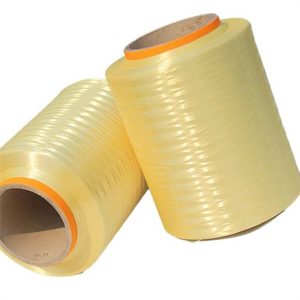
Aramid Yarn: The High-Performance Backbone of Modern Industrial Innovation
As an ISO 17025-certified manufacturer, Impact Materials delivers ultra-high tenacity aramid yarns with tensile strength up to 28g/dtex, engineered for critical applications in ballistic composites, aerospace structures, and industrial reinforcement. Trusted by 50+ Fortune 500 companies, our yarns redefine material reliability in extreme environments.
Technical Specifications: Impact Aramid Yarn Series
| Parameter | Standard Grade (Para-Aramid) | High-Modulus Grade | Flame Retardant Grade (Meta-Aramid) |
|---|---|---|---|
| Linear Density (tex) | 1680/2520/3360 | 1680/2520 | 1250/2500 |
| Tensile Strength (cN/dtex) | 20-22 | 24-26 | 18-20 |
| Elongation at Break (%) | 3.5-4.2 | 2.8-3.5 | 4.0-5.0 |
| Thermal Stability (°C) | Continuous: 200 Peak: 500 |
Continuous: 220 Peak: 550 |
Continuous: 240 Peak: 400 |
* Tested per ASTM D7269 & ISO 2062 standards. Custom blending and sizing available.
Industrial Applications Redefined by Aramid Yarn
Ballistic & Protective Systems
- Bullet-resistant panel weaving (NIJ Level IIIA compliance)
- Cut-resistant gloves with 10x longer lifespan vs steel yarn
- Military parachute cords with 5:1 strength-to-weight ratio
Aerospace Composites
- Radome structural reinforcement for 5G satellite antennas
- Engine firewall textiles with 30-minute burn-through resistance
- Lightweight aircraft cabin interiors (FST compliance)
Precision Manufacturing Process
Polymer Synthesis
PPTA polymerization with 99.95% purity control via continuous bulk process
Dry-Jet Wet Spinning
Producing 100-4000 filament counts with ≤1% diameter variation
Surface Modification
Epoxy/PU sizing for optimal adhesion in rubber (RFL treatment) or resin systems
Global Supply Chain Excellence
Rapid Prototyping
72-hour sample delivery with 50+ standard yarn configurations
Mass Production
10,000+ metric tons annual capacity across 3 dedicated plants
Logistics Network
DDP shipping to EU/NA markets with full REACH/TPCH compliance
Frequently Asked Questions
Q: What’s the difference between para-aramid and meta-aramid yarn?
A: Para-aramid (e.g., Kevlar®-type) excels in tensile strength for ballistic applications, while meta-aramid (e.g., Nomex®-type) offers superior flame resistance for protective clothing.
Q: Can you produce colored aramid yarns?
A: Yes, we offer solution-dyed yarns in 12 standard RAL colors with UV stability guaranteed.
Ready to Reinvent Your Material Strategy?
Our engineers are ready to optimize your application:
Unveiling the Wonders of Aramid in the Global Supply Chain
Introduction to Aramid
1.Definition and Properties
Aramid, short for aromatic polyamide, is a high – performance synthetic fiber. Chemically, it consists of aromatic rings linked by amide bonds. This unique chemical structure endows aramid with a plethora of remarkable properties. Firstly, it boasts an incredibly high strength – to – weight ratio. In fact, it can be up to five times stronger than steel of the same weight, making it an ideal material for applications where strength is crucial.
Secondly, aramid has excellent heat – resistance capabilities. It can withstand extremely high temperatures without significant degradation, remaining stable even in environments where other materials would melt or deform. Additionally, aramid is inherently fire – resistant. When exposed to flames, it doesn’t burn easily and can self – extinguish, providing a high level of safety.
There are different types of aramid, such as para – aramid and meta – aramid. Para – aramid offers superior strength and is often used in high – stress applications. Meta – aramid, on the other hand, has better heat and flame resistance, making it suitable for protective clothing.
2.Historical Development
The story of aramid began in the 1960s when Stephanie Kwolek, a chemist at DuPont, accidentally discovered this revolutionary material. Her initial goal was to develop a lightweight yet strong fiber for use in tires. After numerous experiments, she synthesized the first aramid fiber, which was later commercialized as Kevlar.
In the 1970s, Kevlar started to gain recognition for its outstanding properties. It was first used in the aerospace industry, where its high strength and low weight were highly valued. As time went on, the applications of aramid expanded rapidly. In the 1980s, it found its way into the military field, being used to make bullet – proof vests and helmets. By the 1990s, aramid had become a common material in various industries, including automotive, sports equipment, and construction, marking its transition from a niche product to a widely – used industrial material.
Aramid in the Global Supply Chain
1.Role in the Supply Chain
Aramid plays a pivotal role in the global supply chain, influencing multiple stages from raw material sourcing to end – product delivery. At the raw material level, the production of aramid relies on specific chemical compounds. Suppliers of these precursors need to ensure a consistent and high – quality supply, as any disruption can have a cascading effect on the entire chain.
In the manufacturing phase, aramid production requires specialized facilities and advanced technologies. Manufacturers transform the raw materials into various forms such as yarns and fabrics. Their expertise in production processes determines the quality and performance of the final aramid products.
Logistics and transportation are also crucial. Aramid products, being high – value and often used in critical applications, need to be transported safely and efficiently. Whether it’s shipping aramid yarns to textile factories or delivering finished aramid – based products to end – users, reliable logistics ensure that the supply chain operates smoothly and that products reach the market in a timely manner.
2.Supply Chain Challenges
The aramid supply chain faces several significant challenges. One of the primary issues is the instability of raw material supply. The production of aramid precursors depends on a limited number of suppliers, and any geopolitical tensions, natural disasters, or production disruptions at these suppliers can lead to shortages.
Market demand for aramid is also highly volatile. It is influenced by various factors such as economic conditions, technological advancements, and regulatory changes. For example, a sudden shift in the aerospace or defense industries’ demand can cause significant fluctuations in the aramid market. Moreover, the high – tech nature of aramid production means that any technological glitches or quality control issues at the manufacturing stage can disrupt the supply chain and lead to delays in product delivery.
Aramid Products and Applications
1.Aramid Yarn
Aramid yarn is a remarkable product derived from aramid fibers. It inherits the outstanding properties of aramid, featuring high strength, excellent heat resistance, and remarkable abrasion resistance. The production process of aramid yarn involves a series of complex steps. First, the aramid polymer is dissolved in a suitable solvent to form a spinning solution. Then, through a spinning process, the solution is extruded through spinnerets to form filaments. These filaments are then drawn, washed, and dried to enhance their strength and other properties.
Aramid yarn finds extensive applications in various industries. In the textile industry, it is used to make high – performance fabrics for protective clothing, such as cut – resistant gloves and heat – resistant aprons. In the cable industry, aramid yarn is employed as a reinforcing material. Its high strength helps to improve the tensile strength of cables, making them more durable and reliable, especially in harsh environments. Additionally, it is also used in the production of ropes and nets, where its strength and resistance to wear are highly valued.
2.Aramid Fabric
Aramid fabric is a key product in the aramid family, known for its exceptional performance. It has excellent heat and flame resistance, making it an ideal material for fire – fighting suits. When exposed to high – temperature flames, aramid fabric can effectively protect the wearer from burns. It also has high strength and cut – resistance, which is why it is widely used in the production of bullet – proof vests and stab – resistant clothing.
There are different types of aramid fabrics, including para – aramid and meta – aramid fabrics. Para – aramid fabric offers higher strength and is more suitable for applications requiring high – impact resistance, such as military and law – enforcement protective gear. Meta – aramid fabric, on the other hand, has better heat and flame resistance, making it a top choice for industrial protective clothing in high – temperature environments. Overall, aramid fabric plays a crucial role in ensuring safety and protection in various fields.
Case Studies
1.Successful Applications
Aramid has witnessed numerous successful applications across different industries. In the aerospace sector, Boeing incorporated aramid composites in the construction of its 787 Dreamliner. The high strength – to – weight ratio of aramid reduced the aircraft’s overall weight, leading to significant fuel savings and increased flight range. This not only enhanced the aircraft’s performance but also reduced its environmental impact.
In the automotive industry, Formula 1 race cars use aramid in their bodywork and safety components. The material’s excellent impact resistance protects the drivers during high – speed crashes, while its light weight improves the car’s acceleration and handling.
In the sports equipment field, tennis racket manufacturers use aramid to reinforce the frames. This results in rackets that are more durable, provide better power transfer, and offer enhanced control, giving players a competitive edge.
2.Lessons Learned
From these successful applications, several lessons can be gleaned for businesses. Firstly, understanding the unique properties of aramid and matching them with specific industry needs is crucial. Companies should conduct in – depth research to identify where aramid can bring the most value.
Secondly, investing in research and development is essential. As demonstrated by Boeing, continuous innovation in using aramid can lead to breakthroughs in product performance.
Thirdly, quality control is non – negotiable. In high – stakes applications like aerospace and automotive, any compromise in the quality of aramid products can have severe consequences. Therefore, businesses must establish strict quality management systems throughout the production process.
Future Trends and Outlook
1.Technological Advancements
The future of aramid technology is brimming with potential. Researchers are actively engaged in the development of new aramid materials. These novel materials aim to possess even more exceptional properties, such as enhanced strength, better chemical resistance, and improved flexibility.
In terms of production processes, there is a strong push towards more efficient and environmentally – friendly methods. For instance, efforts are being made to reduce the use of harmful solvents in the manufacturing of aramid. Additionally, advancements in nanotechnology may enable the production of aramid with more precise structures, leading to products with tailored performance characteristics. These technological advancements will not only expand the application scope of aramid but also improve its overall competitiveness in the market.
2.Market Opportunities
The aramid market presents numerous future opportunities. With the increasing demand for high – performance materials in emerging industries like electric vehicles and renewable energy, aramid is well – positioned to gain a larger market share. In electric vehicles, aramid can be used in battery packs for better safety and in lightweight components to improve energy efficiency.
For businesses, strategic moves include focusing on niche markets where aramid’s unique properties can be fully utilized. Collaborating with research institutions to stay at the forefront of technological advancements is also advisable. Moreover, expanding into international markets, especially those with growing industrial sectors, can help companies tap into new customer bases and drive growth in the aramid market.